Malta Gambling License

Published:
June 17, 2025
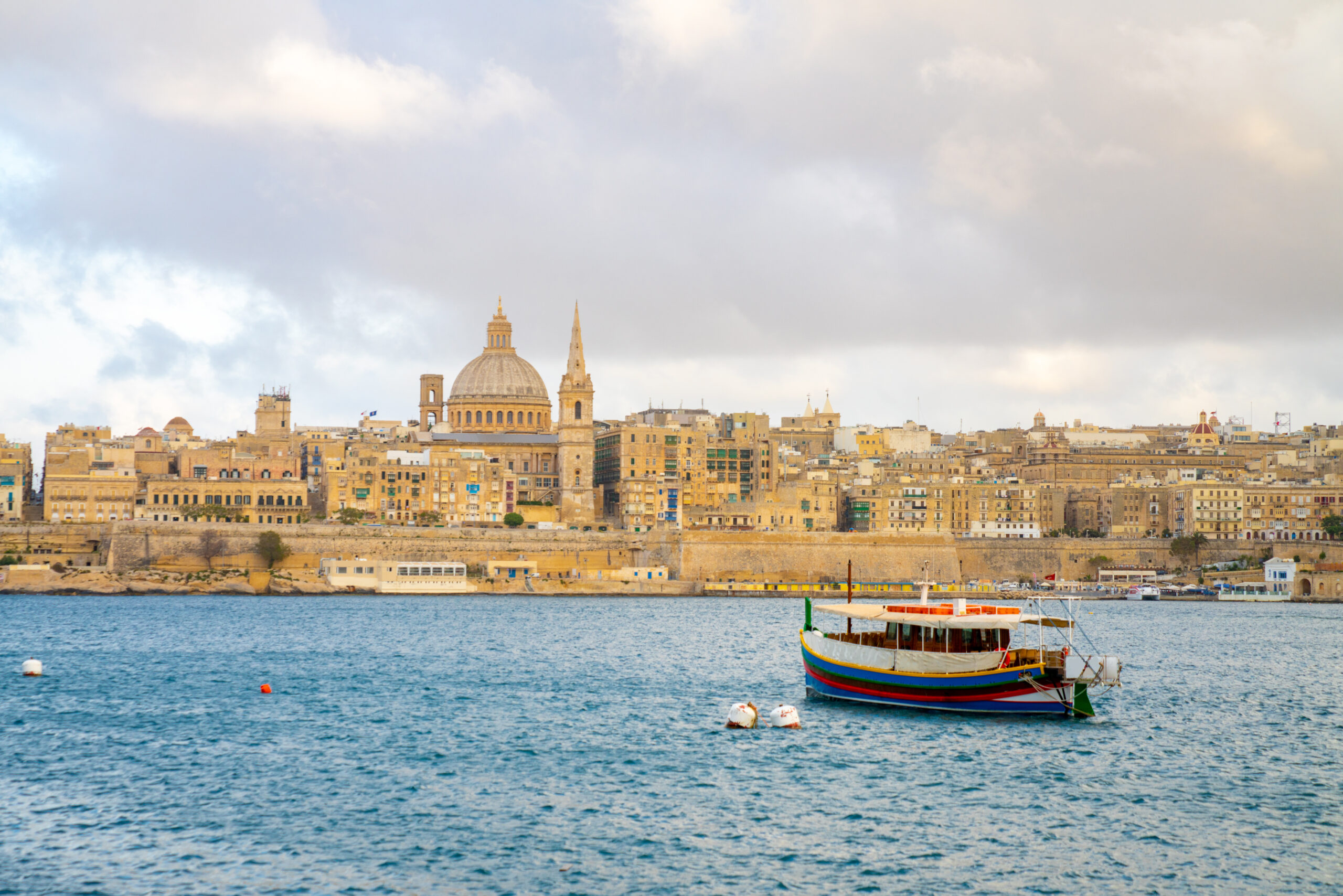
beautiful sunset view historic sites by river valletta malta scaled

The gamble market is booming, and picking the right permit can make or break your venture. Some operators choose speed and low upfront costs, while others value long-term trust and reach. The Malta permit stands out for its solid reputation and comprehensive market access. Submission rate barely 30 for Malta gaming license 2025, despite Malta gaming authority unveiling streamlined ingress edicts into Europe’s foremost igaming nexus.

Demystifying Malta Gambling License

May’s mandate fixes malta gambling license application fee at 5 000; ensuing annual levies oscillate 10 000 25 000 per tier. Governance impost capped 600 000 – novices granted twelvemonth hiatus – while equity threshold spans 40 000 100 000 tied to game portfolio.

“Streamlined conduit marries lowered threshold with impregnable player safeguards,” avers Emily Caruana, Head of Oversight at malta gaming authority.

Accreditation Roadmap

Thus, how to get Malta gambling license? Mastering obtaining malta gambling license demands satisfying core Malta license requirements.

  1. Corporate Chartering. Forge Maltese corporate vehicle; secure domestic headquarters.
  2. Designated Functionaries. Nominate chief executive, compliance steward, IT-security custodian.
  3. Integrity Vetting. Deliver audited IT infrastructures, integrity dossiers and exhaustive fiscal scrutiny.
  4. AML Framework. Exhibit anti-money-laundering architecture alongside responsible-gaming measures.

Passage – dossier submission culminating in active Malta online casino license or Malta betting license – spans roughly four-six lunations.

Permit Taxonomy

MGA delineates dual pathways. First one is Malta B2C gaming license tiers.

  1. Level I: Casino, poker, bingo.
  2. Level II: Financial wagers.
  3. Level III: Spread bets.
  4. Level IV: Lotteries, limited-risk amusements.

Second one is Malta B2B gaming license categories.

  1. Platform architects: 25 000 p.a.
  2. Back-office facilitators: 10 000 p.a.

Each category ensures uniform adherence to stringent technical and fiscal characteristicks. Interested enterpunurs might also turn their look to ready casinos for sale that we’re providing in wide list for selection.

Malta VS Curacao Gaming License

Industry players often compare Curacao and Malta routes. Curacao approval takes just a few weeks and costs about €18,000, while a Malta iGaming license requires more time and investment but grants full EU market access, boosts brand credibility, and ensures stronger player protection. 

Malta Gaming License Cost 2025 Prognosis

Beyond submission fee, entrants reserve funds covering governance imposts (up to 600 000), share capital 40 000 100 000), recurrent audits and reporting overhead. With Malta gambling company setup, 2025 filings poised surge.We can also offer you plenty of businesses for sale. Our experts are here to advice you and provide fully-covering support.

How do I get a gambling license in Malta?

1. Charter domestic entity.
2. Secure premises. 
3. Appoint functionaries. Furnish technical and fiscal attestations.
4. Institute AML framework.
5. File Malta gaming license application with 5 000 remittance.

How much is a casino license in Malta?

Submission fee 5 000; annual dues span 10 000 25 000 p.a. tier-dependent, plus revenue-linked oversight impost.

Is it legal to gamble in Malta?

Yes, legal provisions permit play solely via MGA-sanctioned platforms under strict Malta gambling regulation.

What is the easiest country to get a gambling license?

Curacao prevails thanks to modest fees (€ 18 000 – € 38 000) and swift enactment, yet lacks EU ingress and authoritative standing of Malta.


Related insights

Three new Bills will reform financial services regulation in New Zealand

There have been numerous changes in the regulatory framework of New Zealand in the last ten years. Largely, it has been to the conduct and outcomes in the sector. Although, this has made the environment quite complex for firms to navigate, thus increasing operational burdens and costs. Overlapping demands, multiple authorizations, and detailed adherence obligations…

Read more 07.02.2026

Key points about financial markets and services in New Zealand

The fiscal sector in New Zealand is regulated by a sturdy supervisory structure put in place to act as a protective cover for the investor and ensure a well-functioning trading environment. The requirements for providing investment products and giving monetary advice are set out in the FMCA and its related rules, enforced by the FMA….

Read more 06.02.2026

Malta Gaming Licence 2026 – A Comprehensive Guide

In these last years, Gambling concept in Malta has seen a total sea transformation into one of the most respected, solid, and incontrovertibly complete adjustment frameworks for the worldwide iGaming industry. It has managed to establish itself clearly as a prime international operational hub pertinent to people who seek stability, transparency, and market access guarantee….

Read more 05.02.2026

Local Director in Argentina (2026): Residency Rules and Who Can Act as Legal Representative

At the moment, Argentina has a rigid, formal corporate control system. The individual designated to oversee and sign on behalf of the business cannot serve as a figurehead for new investors. Authorities anticipate that someone with legal standing in the nation and the capacity to make actual decisions will occupy this position. Errors at this…

Read more 04.02.2026

MLRO Update 2026: UIF Resolution 3/2026 and the New Freeze-and-Report Workflow

Resolution 3/2026 was made public by the Argentinean UIF earlier this year, 2026. It’s a pack of measures related to the behavior that any executor of the obligated markets need to follow with regards to operations linked to international restriction lists and the flow of prohibited weapon technologies. It doesn’t introduce a whole new tier…

Read more 02.02.2026

Argentina Tax Reporting 2026: What PSPs Must Start Sending to the Tax Authority

General Resolution 5804/2025 was released by the Argentine Ministry of Justice in the Official Gazette at the end of 2025. The document appeared narrow and technical at first. In actuality, it modifies the collection and transmission of financial data linked to digital platforms to the tax authority. The act grants the ARCA more power to…

Read more 30.01.2026

Lithuania grants MiCA CASP authorisations to CoinGate (Decentralized) and Nuvei Liquidity

Lithuania has reinforced its position in the evolving European crypto regulatory landscape by granting two new crypto-asset service provider licences under the Markets in Crypto-Assets Regulation (MiCA). The approvals were issued to CoinGate, operated by UAB Decentralized, and to Nuvei Liquidity, UAB. The decision highlights Lithuania’s increasingly selective approach to crypto regulation and reflects a…

Read more 29.01.2026

Crypto Tax Free Countries 2026

In 2026, crypto-currency taxation is evolving globally and yet rapidly in a streamlined manner. Although digital assets are treatable as property eligible for taxation or financial instruments in most nations, still a larger number of countries strictly enforce zero taxes and bestow a minimal tax rate on crypto. These countries have emerged as the best…

Read more 27.01.2026

How to Get an AEMI License in the UK in 2026

AEMI licence is a permit issued by the UK Financial Conduct Authority to operate as an authorised electronic money institution. This status allows firms to issue electronic money, provide a wide range of payment services and conduct transactions comparable to basic banking functions, with exception of lending and accepting deposits.  In practice, AEMI is often…

Read more 25.01.2026

EMI license in Europe how to choose a country

Electronic money issuer licence in Europe is a permit released by the national financial regulator of a European Union member state to issue electronic money and offer related payment services. It allows you to officially work with electronic balance accounts, issue prepaid products, open customer accounts and make payments within the EU and EEA through…

Read more 24.01.2026

Regulation of payment institutions in the EU country by country differences

Payment institutions are a cornerstone of modern Europe’s economy. They facilitate the transfer of money between people and businesses, in particular the receipt of card payments, operation of online wallets, and delivery of digital financial services without necessarily engaging the services of a full-fledged bank. On the other hand, a common set of rules does…

Read more 23.01.2026

How to Choose a Gaming License: Guide for iGaming

Permission to operate is the first step in any online gambling project. Not branding, not traffic, not design. The platform operates outside of the legal economy in the absence of a state-issued gaming license. This one element is necessary for payments, partnerships, advertising, and financial infrastructure access. Licensing is frequently viewed by founders as supporting…

Read more 22.01.2026