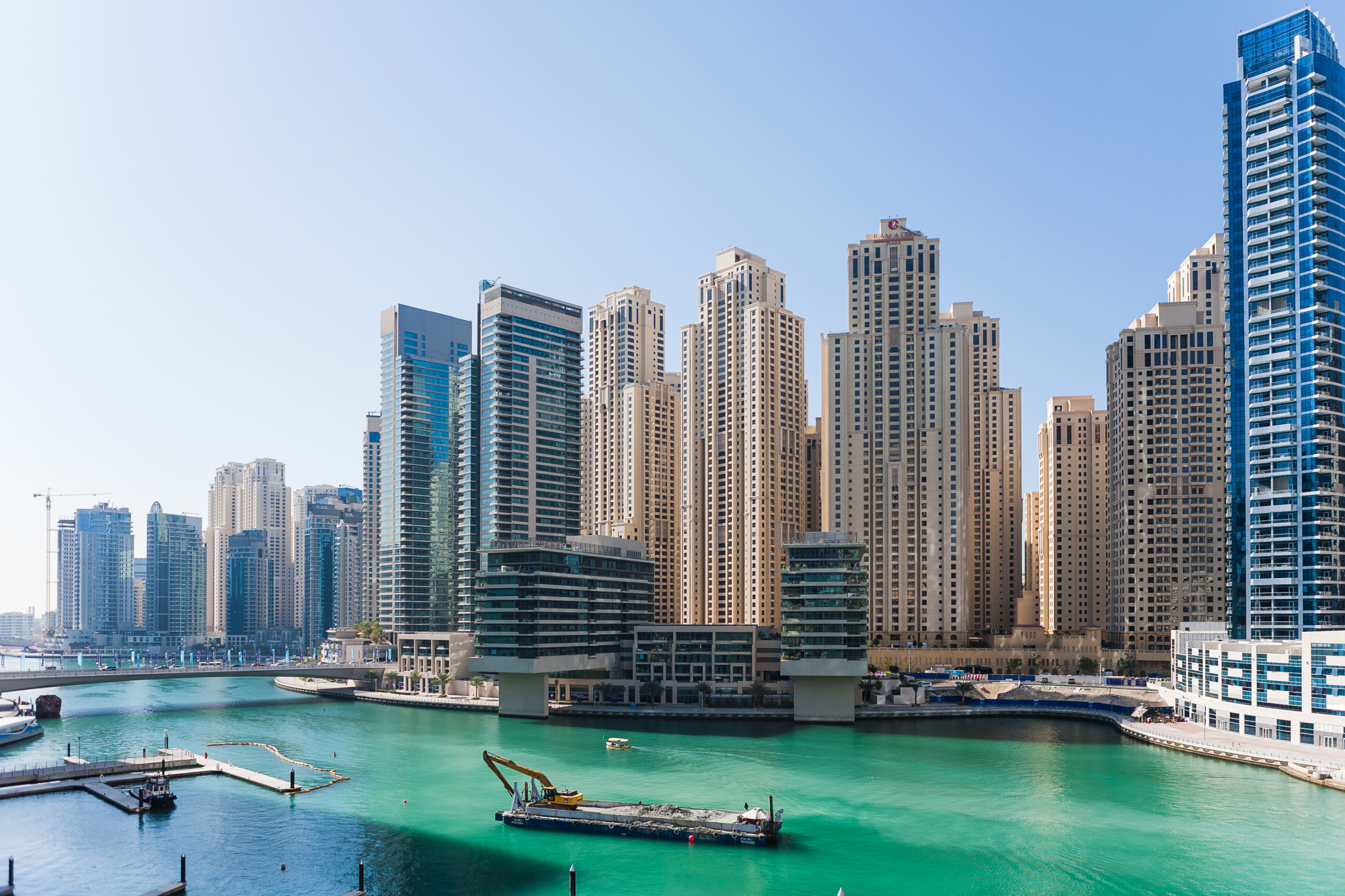
Dubai Real Estate Surges with Freehold Expansion and Smart Rental Index, Driving $9.6 Billion in Sales

Published:
February 27, 2025
2000

This direction’s householding sphere continues to thrive, transforming its status as a premier place for financiers searching for property for sale in the UAE. In the early past, the sphere gained an impressive AED 35.2 billion (US$9.6 billion) in transferring operations, with 13,043 householding deals—marking a 22.9% augment in price and a 23.1% lift in volume. This remarkable growth is fueled by deliberate regulatory reforms, including enlarged freehold proprietorship and a data-driven rental framework, making this region an even more alluring trade for regional and cross-border financiers.

Freehold Enlargement Suggests Prime Investment Venues

One of the most shifting hurdles in Dubai’s householding landscape is the adjustment of the biggest agglomerations into freehold zones. This groundbreaking move allows cross-border financiers to own luxury householdings in these highly strategic places, significantly boosting trade liquidity and revealing cutting-edge venture capabilities.

Industry experts are praising this regulatory shift as a transformative move. The rapid pace of regulatory changes in this direction is creating a highly enchanting venture sphere, characterized by cleverness and strong liquidity. International financiers are gradually drawn to the city, recognizing its aptitude to suggest resilient returns, equity rise, and a legislative scheme that supports sustainable, persistent prosperity.

This shift is predicted to fuel reconstruction initiatives, encourage persistent householding prices, and further solidify the region’s status as a worldwide householding centre.

New Developments and Resale Activity Demonstrate Market Evolution

The householding sphere of this region is illustrating a healthy balance between pre-construction and existing householding merchants, showcasing its profundity and refinement. In the last month, off-plan transfers accounted for more than $4 bill., while the existing trade recorded more than $5 bill.

This balance is crucial for maintaining marketability, permitting builders to cater to both speculative financiers searching high-growth opportunities and end-users searching for existing householdings. The steady outcomes of the resale trade further highlights the region’s enlarging appeal among dedicated financiers who define the city’s capabilities to suggest both immediate returns and sustainable capital appreciation.

Pro-Rent Index Enhances Market Clearness

Another major factor driving investor confidence is the Dubai Land Department’s value which is a tool or metric that tracks and measures various factors within the rental market, such as rental prices, demand trends, and property performance. It is designed to furnish insights into market conditions and help financiers, landlords, and tenants make informed decisions by offering a clear view of the rental landscape. Typically, such an index enhances clearness, forcing stakeholders to understand trade fluctuations, spot venture prospects, and assess the overall health of the housing rental sphere. By increasing predictability in rental returns, this initiative makes Dubai’s property market even more attractive for those seeking stable, long-term investments.

The improved legislative scheme aligns with Dubai’s dedication to resilient enlargement and investor-friendly policies, ensuring that both short-term and long-term financiers can maximize their returns in a highly competitive trade.

Upscale and Mid-Market Spheres Retain Financiers Request

Dubai’s aptitude to serve a wide scope of buyers persists one of its greatest strengths. The prosperity market continues to thrive, with villas on Palm Jumeirah averaging more than $12.8 mill, reflecting sustained requests for premium residences. At the same time, JVC and DAMAC Hills 2 are hotspots for mid-trade financiers, offering high-quality residential options at alluring price points.

This dynamic pricing structure ensures that this region remains accessible to both high-net-worth individuals and middle-income financiers, driving steady demand across all segments of the market.

Dubai’s Householding Outlook: A Thriving Trade on the Rise

Projecting, Dubai’s house holding sphere is well-positioned for sustained expansion. The emirate’s dedication to legislative base, amenities development, and resilient urban enlargement is reinforcing its status as a worldwide trailblazer in these sophistications.

With increased equity inflows from institutional financiers, continuous urban renewal projects, and a robust regulatory ecosystem, Dubai’s householding sector is set to retain its skyward trajectory farther than 2025. As requests for householding continues to grow, the city’s market remains one of the most attractive and dynamic in the world.

By continuously evolving through strategic policy changes, smart investments, and forward-thinking development, Dubai is not just keeping pace with global trends—it’s setting new benchmarks for the future of real estate.


Related insights

Three new Bills will reform financial services regulation in New Zealand

There have been numerous changes in the regulatory framework of New Zealand in the last ten years. Largely, it has been to the conduct and outcomes in the sector. Although, this has made the environment quite complex for firms to navigate, thus increasing operational burdens and costs. Overlapping demands, multiple authorizations, and detailed adherence obligations…

Read more 07.02.2026

Key points about financial markets and services in New Zealand

The fiscal sector in New Zealand is regulated by a sturdy supervisory structure put in place to act as a protective cover for the investor and ensure a well-functioning trading environment. The requirements for providing investment products and giving monetary advice are set out in the FMCA and its related rules, enforced by the FMA….

Read more 06.02.2026

Malta Gaming Licence 2026 – A Comprehensive Guide

In these last years, Gambling concept in Malta has seen a total sea transformation into one of the most respected, solid, and incontrovertibly complete adjustment frameworks for the worldwide iGaming industry. It has managed to establish itself clearly as a prime international operational hub pertinent to people who seek stability, transparency, and market access guarantee….

Read more 05.02.2026

Local Director in Argentina (2026): Residency Rules and Who Can Act as Legal Representative

At the moment, Argentina has a rigid, formal corporate control system. The individual designated to oversee and sign on behalf of the business cannot serve as a figurehead for new investors. Authorities anticipate that someone with legal standing in the nation and the capacity to make actual decisions will occupy this position. Errors at this…

Read more 04.02.2026

MLRO Update 2026: UIF Resolution 3/2026 and the New Freeze-and-Report Workflow

Resolution 3/2026 was made public by the Argentinean UIF earlier this year, 2026. It’s a pack of measures related to the behavior that any executor of the obligated markets need to follow with regards to operations linked to international restriction lists and the flow of prohibited weapon technologies. It doesn’t introduce a whole new tier…

Read more 02.02.2026

Argentina Tax Reporting 2026: What PSPs Must Start Sending to the Tax Authority

General Resolution 5804/2025 was released by the Argentine Ministry of Justice in the Official Gazette at the end of 2025. The document appeared narrow and technical at first. In actuality, it modifies the collection and transmission of financial data linked to digital platforms to the tax authority. The act grants the ARCA more power to…

Read more 30.01.2026

Lithuania grants MiCA CASP authorisations to CoinGate (Decentralized) and Nuvei Liquidity

Lithuania has reinforced its position in the evolving European crypto regulatory landscape by granting two new crypto-asset service provider licences under the Markets in Crypto-Assets Regulation (MiCA). The approvals were issued to CoinGate, operated by UAB Decentralized, and to Nuvei Liquidity, UAB. The decision highlights Lithuania’s increasingly selective approach to crypto regulation and reflects a…

Read more 29.01.2026

Crypto Tax Free Countries 2026

In 2026, crypto-currency taxation is evolving globally and yet rapidly in a streamlined manner. Although digital assets are treatable as property eligible for taxation or financial instruments in most nations, still a larger number of countries strictly enforce zero taxes and bestow a minimal tax rate on crypto. These countries have emerged as the best…

Read more 27.01.2026

How to Get an AEMI License in the UK in 2026

AEMI licence is a permit issued by the UK Financial Conduct Authority to operate as an authorised electronic money institution. This status allows firms to issue electronic money, provide a wide range of payment services and conduct transactions comparable to basic banking functions, with exception of lending and accepting deposits.  In practice, AEMI is often…

Read more 25.01.2026

EMI license in Europe how to choose a country

Electronic money issuer licence in Europe is a permit released by the national financial regulator of a European Union member state to issue electronic money and offer related payment services. It allows you to officially work with electronic balance accounts, issue prepaid products, open customer accounts and make payments within the EU and EEA through…

Read more 24.01.2026

Regulation of payment institutions in the EU country by country differences

Payment institutions are a cornerstone of modern Europe’s economy. They facilitate the transfer of money between people and businesses, in particular the receipt of card payments, operation of online wallets, and delivery of digital financial services without necessarily engaging the services of a full-fledged bank. On the other hand, a common set of rules does…

Read more 23.01.2026

How to Choose a Gaming License: Guide for iGaming

Permission to operate is the first step in any online gambling project. Not branding, not traffic, not design. The platform operates outside of the legal economy in the absence of a state-issued gaming license. This one element is necessary for payments, partnerships, advertising, and financial infrastructure access. Licensing is frequently viewed by founders as supporting…

Read more 22.01.2026